Online or onsite, instructor-led live C++ training courses demonstrate through hands-on practice how to develop applications with C++, C++11, C++14, C++17, and other versions.
C++ training is available as "online live training" or "onsite live training". Online live training (aka "remote live training") is carried out by way of an interactive, remote desktop. Onsite live C++ training can be carried out locally on customer premises in Tokyo or in NobleProg corporate training centers in Tokyo.
NobleProg -- Your Local Training Provider
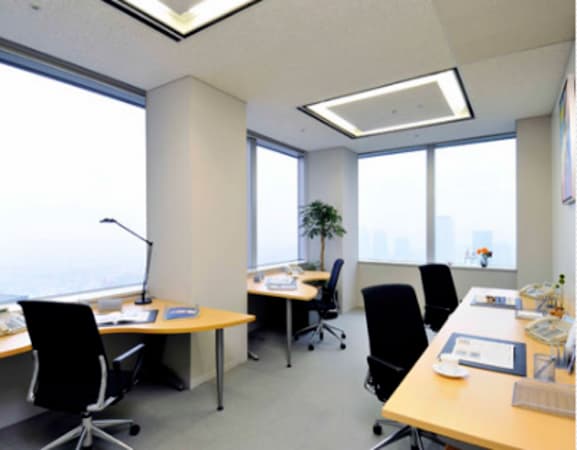
Tokyo Shinjuku Park Tower
Shinjuku Park Tower, 3 Chome-7-1 Nishishinjuku, Shinjuku-ku, Tokyo, japan, 160-0023
The Shinjuku Park Tower Centre is on the 30th floor of a 52-storey landmark building in the business district of Shinjuku - a major commercial and government administrative area.
Nishi Shinjuku is noted for its impressive skyline of skyscrapers. The centre is three minutes' walk from one of the tallest buildings in Japan - the Tokyo Metropolitan Government Building, designed by the same architect who created the Park Tower. The business community knows the building for its five-star hotel, which is above the centre. Many corporations have their HQs here, including airlines, food companies, technology giants and computer gaming firms. The centre has a meeting room that will take up to 60 people. There's a complimentary shuttle bus service from Shinjuku station (the busiest station in the world) to the building and excellent public transport links to Narita International Airport by airport limousine from Shinjuku Station. It's next to the Expressway Number 4 on the motorway network.
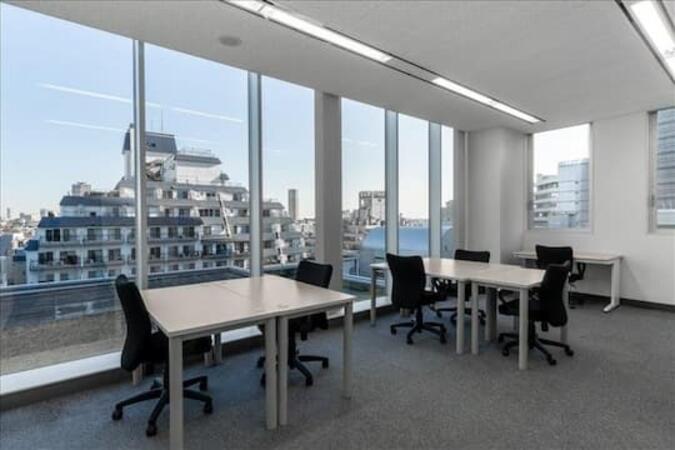
Tokyo, Shibuya Glass City
35th Floor, Glass City Shibuya 6F, 16-28 , Tokyo, japan, 150-0036
The Shibuya Glass City Business centre is located on the 6th floor of this 11 storey grade A office building in Tokyo's colourful Shibuya business district. This is also known as Tokyo's silicon valley and is home to many IT and technology businesses. Conveniently located, the nearest station is Shinsen on the Keio Inokashira line and the centre is an 8 minute walk from Shibuya JR station which offers connections to JR East Japan Rail, Keio Rail, Tokyu Rail and the Tokyo Metro (Fukutoshin , Ginza, Hanzomon & Den'entoshi lines). There is convenient access to all major cities and both Haneda and Narita international airports. The area has many major department stores, shopping malls, restaurants and night clubs and Yoyogi Park is nearby. With its central location and excellent services, Regus Shibuya Glass City Centre is a flexible and convenient venue in the middle of this major business district.
This instructor-led, live training in Tokyo (online or onsite) is aimed at developers who wish to use advanced C++ programming techniques to develop complex, secure, and high-performance systems and applications.
By the end of this training, participants will be able to:
Set up a development environment that includes all C++ libraries, packages and frameworks.
Understand the features, components, and basic elements of C++.
Create complex C++ applications using advanced programming techniques.
Learn how to write readable, fast, and secure code in C++.
Know the common security pitfalls in C++ language and how to mitigate them.
Implement test strategies for code quality and security control.
Use the diagnostics and debugging tools in C++ development.
This training in Tokyo teaches secure C and C++ coding, covering buffer overflows, use-after-free, and input validation. Participants apply defensive techniques and static analysis to build hardened software resilient against cyberattacks and real-world vulnerabilities.
This instructor-led course in Tokyo explores how C++ fits embedded systems. It covers object-oriented design, memory management, and real-time programming to build accurate, efficient code. Participants will create a sample application to gain practical skills.
This 2-day course in Tokyo helps C++ programmers apply the C++11 standard. It is useful for financial applications developers. Learn new features with coding examples to be executed within the lab, covering rvalue references, threading, and move semantics.
This instructor-led, live training in Tokyo (online or onsite) is aimed at C++ developers who wish to use CUDA to accelerate applications, write high-performance GPU kernels, and leverage parallel algorithm libraries for scientific computing, data processing, and machine learning workloads.
This training in Tokyo bridges the gap between C and C++ for embedded systems. It explores C++11 features like move semantics and concurrency. Learn to use templates for bare-metal programming and apply design patterns. Gain the skills to use C++ correctly in resource-constrained environments.
This instructor-led training in Tokyo covers core C++ OOP concepts like classes, encapsulation, and polymorphism. Developers learn to design modular, reusable applications through hands-on labs, exploring inheritance, exceptions, and templates to build scalable software solutions effectively.
This instructor-led, live training in Tokyo provides in-depth coverage of Qt and its modules.
By the end of this training, participants will have the necessary knowledge and practice to develop their own C++ application using Qt.
Read more...
Last Updated:
Testimonials (7)
Detailed explanation, re-iteration of points in a quite subtle way that really drove the knowledge home very well. Rod's willingness to double-check the odd obscure question that we rasied, to be sure that his answers were 100% right. Also, his interest in discussing the pros & cons of alternate coding styles so that we learnt not only how to use C++ in our intended way, but why it should be done that way.
Nick Dillon - cellxica Ltd
Course - Using C++ in Embedded Systems - Applying C++11/C++14
Experience sharing, it's teacher's know-how and valuable.
Carey Fan - Logitech
Course - C/C++ Secure Coding
The online-ness of it meant that we could save a lot of time. Much appreciated. Also, the fact that the trainer knew both c# and Cpp was a huge help since he could explain everything through knowledge we already possessed.
Gabor - Rheinmetall Electronics Hungary Kft
Course - Advanced C++
We have been show many different tools (gdb,valgrind,callgrind, google sanitizers, ...) which was really great to have a base knowledge that we can extend when we will need to use one of those tools.
Thibault Marechal - Red Embedded Consulting Sp. z o.o.
Course - C++ 11 Programming
The trainer really adapted the training to our level and took a lot of time and efforts to make sure the presentation was well adapted.
Online C++ training in Tokyo, C++ training courses in Tokyo, Weekend C++ courses in Tokyo, Evening C++ training in Tokyo, C++ instructor-led in Tokyo, Evening C++ courses in Tokyo, C++ trainer in Tokyo, C++ on-site in Tokyo, C++ coaching in Tokyo, C++ boot camp in Tokyo, C++ private courses in Tokyo, C++ one on one training in Tokyo, Weekend C++ training in Tokyo, C++ classes in Tokyo, C++ instructor-led in Tokyo, Online C++ training in Tokyo, C++ instructor in Tokyo