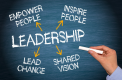
コース概要
Leadership Development Program
Program Duration: 21 Hours
Recommended Format: 3 full days (or modular delivery in 6 half-days)
Context and Rationale
Your organization is in a rapid growth phase. Middle managers are transitioning from specialist or technical roles into leadership positions. This transition introduces structural tension:
– Authority without overreach
– Accountability without micromanagement
– Cross-functional friction under time pressure
– Communication breakdowns during scale
– Avoidance of difficult performance conversations
Program Objectives
By the end of the program, participants will be able to:
– Operate with clear leadership authority and defined accountability
– Delegate effectively in growing teams without losing oversight
– Conduct structured, direct, and confident performance conversations
– Communicate with clarity and alignment across functions
– Strengthen cross-functional collaboration in fast-paced environments
– Build credibility and followership beyond positional authority
Program Structure (21 Hours)
DAY 1 – Leadership Identity, Authority, and Delegation
Module 1: From Specialist to Leader
– The psychological and structural shift from contributor to leader
– Authority, influence, and decision ownership
– Defining one’s leadership mandate
Outcome: Participants articulate their leadership stance and clarify their scope of authority.
Module 2: Authority and Decision Architecture
– Decision rights and ownership frameworks
– Avoiding escalation overload and bottlenecks
– Balancing autonomy and control
Outcome: Participants redesign decision clarity within their teams.
Module 3: Delegation in Scaling Teams
– Task vs. outcome delegation
– Preventing reverse delegation
– Setting expectations and accountability loops
Outcome: Participants develop a structured delegation model for their team context.
DAY 2 – Communication and Performance Leadership
Module 4: Communication Under Growth Pressure
– Message clarity and reduction of ambiguity
– Communicating intent vs. instructions
– Aligning cross-functional stakeholders
Outcome: Participants improve precision and influence in communication.
Module 5: Conducting Difficult Performance Conversations
– Structuring performance dialogues
– Addressing underperformance without avoidance
– Managing defensiveness and emotional reactions
Frameworks applied: Situation–Behavior–Impact; Feedforward methodology.
Outcome: Participants practice and refine performance conversation competence through structured role simulation.
Module 6: Building Followership and Engagement
– Trust formation in growth environments
– Credibility markers of effective leaders
– Balancing psychological safety with performance standards
Outcome: Participants identify behaviors that increase team engagement and ownership.
DAY 3 – Cross-Functional Leadership and Culture in Scale
Module 7: Leading Across Functions
– Systems thinking in scaling organizations
– Managing friction between speed and governance
– Stakeholder mapping and alignment strategy
Outcome: Participants enhance cross-functional collaboration capability.
Module 8: Building a Performance Culture
– Establishing standards early in scale
– Accountability mechanisms
– Preventing cultural drift
Outcome: Participants define non-negotiable leadership behaviors and performance expectations.
Module 9: Integration and Leadership Roadmap
– 90-day implementation planning
– Personal leadership commitments
– Peer accountability structures
Outcome: Each participant leaves with a practical, time-bound leadership development plan.
Methodology
The program is experiential and practice-driven.
– Applied frameworks tailored to your organizational context
– Real-case simulations based on growth-stage challenges
– Structured peer feedback
– Leadership reflection exercises
– Practical tools and templates for immediate implementation
This is not a lecture-based training. It is an operational leadership lab.
Customization Approach
Prior to delivery, a short diagnostic phase is recommended:
– Stakeholder alignment conversation
– Identification of specific friction points
– Calibration of case simulations to your industry context
This ensures relevance to your organizational structure, pace, and regulatory environment.
Expected Organizational Impact
Short-Term:
– Clearer decision ownership
– Reduction in escalation cycles
– Increased directness in performance management
– Improved cross-functional communication
Mid-Term:
– Stronger middle-management stability
– Reduced ambiguity during growth
– Higher accountability within teams
– Improved engagement and execution discipline
Delivery Options
– Three consecutive full days
– Six half-day sessions
要求
現在他の人の業務を監督または調整している(正式にまたは非公式に)、またはマネージャー役割への移行を準備中である方。
- 組織の構造とチームの責任に関する基本的な理解。
- 議論、実践エクササイズ、およびロールシミュレーションに参加する意欲。
推奨(必須ではありません):
- 現在のリーダーシップ課題(例:委任、パフォーマンス会話、クロスファンクショナルな問題)を1つ持ち込んで、プログラム中に対処します。
正式的なリーダーシップトレーニングの経験は必須ではありません。このプログラムは、異なる段階のリーダーシップ開発をサポートするように設計されています。
お客様の声 (5)
トレーニングとフィードバック
Jochen Jung - Bachem
コース - DZM – delegating tasks and motivating employees
機械翻訳
トピックをよく説明しています。
Gilbert Pineda - Quartzelec Ltd (Philippines Branch)
コース - Leadership 101
機械翻訳
理論を明確に説明し、講師が自身の経験を熱心に語ることで、概念がより親しみやすく記憶に残ります。 フレンドリーで情熱的な講師。
Jacob Tan - Singapore Management University
コース - Leadership Development for Engineers
機械翻訳
RPA、AI、およびIoTに関する情報。
Jubilee Petil - Accenture Inc.
コース - Digital Transformation: Disrupting the Common Delivery of the Common Business Landscape
機械翻訳
I generally was benefit from the interaction and flexibility.
Olivier Pugliesi-Conti
コース - Communicating and Influencing - For Managers and Team Leaders
機械翻訳